


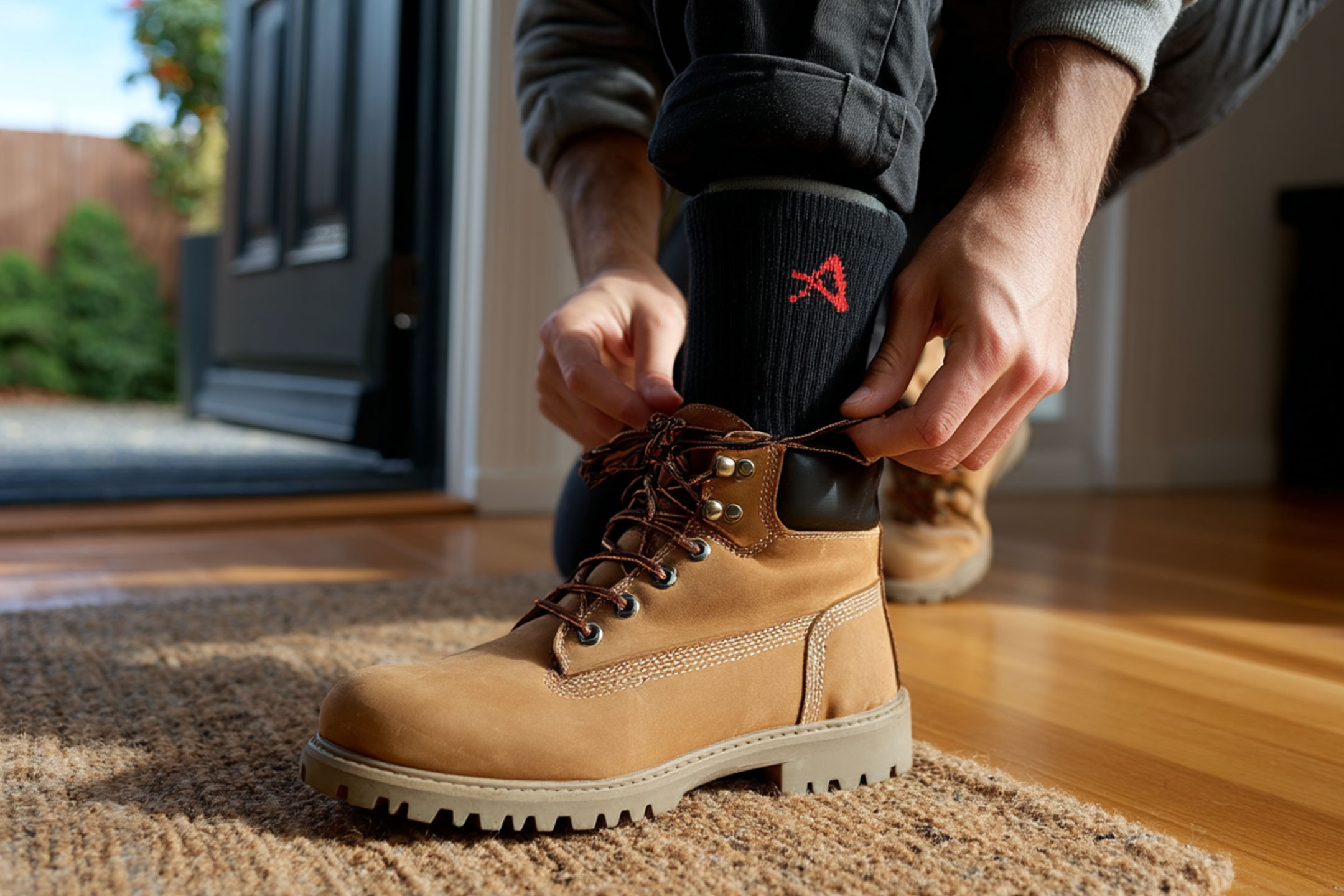
Most people blame sweat for smelly feet. Sweat is part of the picture, but the smell itself comes from bacteria breaking down sweat on the skin’s surface. Your feet have around 250,000 sweat glands and spend most of the day enclosed in shoes, which creates exactly the warm, moist environment bacteria need to multiply. The sock you wear determines how long your foot stays in those conditions.
Getting the material right makes a real difference. Getting it wrong compounds the problem across every hour of wear.
Why your current socks might be making it worse
Cotton is the default for most socks and a poor choice for people with smelly feet. Cotton absorbs moisture well but holds onto it once saturated. A wet cotton sock sitting against your skin for eight hours provides bacteria with exactly what they need to thrive.
Bamboo socks are often marketed as antibacterial, but most of the natural antibacterial properties in bamboo fibre are lost during manufacturing. In practice, bamboo socks perform similarly to cotton for odour control.
Synthetic socks (polyester and nylon blends) wick moisture better than cotton but provide no antibacterial protection. They keep feet drier, which helps, but odour-causing bacteria can still accumulate on the fibre over time.
What to actually look for
Two properties make a meaningful difference for smelly feet: moisture wicking and inherent antibacterial protection.
Moisture wicking pulls sweat away from the skin and allows it to evaporate rather than pooling against the foot. This directly reduces the damp environment bacteria need. A sock that keeps feet drier across a full day produces significantly less odour than one that absorbs and holds moisture.
Antibacterial protection means the sock material actively inhibits the bacteria responsible for odour. The critical distinction is whether that property is built into the fibre or applied as a surface treatment. Surface treatments like sprays and coatings wash out over time, usually within 20-30 wash cycles. Once the treatment is gone, you’re left with a standard sock.
Metis PCA™ fibre is a polyacrylate fibre where the antibacterial and moisture-wicking properties are part of the polymer structure itself. The fibre has been independently tested to reduce odour-causing bacteria by 99%, and because the property is structural rather than applied, it doesn’t degrade with washing. Akeso socks use Metis PCA™ as the primary fibre, which is also inherently antifungal, relevant because the same warm, moist conditions that cause odour also create the conditions for fungal infections like tinea.
Does washing socks more often fix the problem?
Washing removes bacteria that have accumulated on the fabric, which temporarily reduces odour. The problem is that standard sock fibres don’t prevent bacteria from re-establishing between washes. If the sock material provides no antibacterial protection, the odour cycle starts again from the first hour of wear.
Socks with inherent antibacterial properties inhibit bacterial growth during wear, which means they stay fresher between washes and start each wear in better condition, particularly during travel or multi-day activities where washing frequency is limited.
Other factors worth considering
Sock material is the most controllable variable, but a few other things contribute to foot odour that are worth addressing alongside it.
Shoe hygiene. Bacteria accumulate in shoes as well as socks. Rotating shoes between wears gives them time to dry out. Shoes that never fully dry become a persistent source of bacterial recontamination regardless of what sock you’re wearing.
Sock height in enclosed footwear. A sock that sits at or below the shoe collar traps heat and moisture in the worst spot. A mid-length or longer sock that sits above the boot or shoe collar allows slightly better airflow and reduces the concentration of sweat around the ankle.
Synthetic shoe linings. Many cheaper work boots and casual shoes have synthetic linings that don’t breathe. The sock has to work harder to manage moisture in those conditions. A breathable leather or mesh-lined shoe gives the sock more room to do its job.
For more on what causes foot odour and the less obvious triggers behind it, see our article on 6 surprising causes of foot odour.
Frequently asked questions
What are the best socks for smelly feet?
Socks made from fibres with inherent antibacterial properties perform best. The key word is inherent: the antibacterial action needs to be structural to the fibre, not a surface coating that washes out. Akeso socks use Metis PCA™ fibre, which has been independently tested to reduce odour-causing bacteria by 99% and maintains that performance through repeated washing.
Do antibacterial socks actually work for smelly feet?
Yes, if the antibacterial property is genuine and durable. Many socks are marketed as antibacterial but rely on surface treatments that wash out within a few weeks of regular use. Socks with structural antibacterial properties, where the fibre itself inhibits bacteria rather than a coating applied to it, maintain their effectiveness over time and make a measurable difference to foot odour across a full day of wear.
Why do my feet smell even when I wash them?
The odour cycle resets quickly. Even after washing, bacteria begin re-establishing on the skin within hours of putting shoes back on. If your socks absorb and hold moisture, they accelerate that process by creating the conditions bacteria need. A sock that wicks moisture away and inhibits bacterial growth interrupts the cycle rather than just temporarily resetting it.
Can smelly feet be a sign of something else?
Persistent foot odour is usually just bacteria, but it can be associated with hyperhidrosis (excessive sweating) or fungal infections like tinea. If the odour is accompanied by itching, peeling skin, or redness between the toes, a fungal infection is likely contributing. Antifungal socks address both the odour and the fungal component. If the problem persists despite changing sock material and shoe hygiene, it’s worth speaking to a GP or podiatrist.
How often should you wash socks if you have smelly feet?
After every wear is standard and appropriate. For people with persistent foot odour, the more relevant question is what the sock is doing during wear. A sock with inherent antibacterial properties produces less odour accumulation across the day and starts each wear in better condition than one that provides no antibacterial protection regardless of how often it’s washed.
Do moisture wicking socks help with foot odour?
Yes, because they remove the moisture that bacteria need to multiply. A sock that keeps feet drier throughout the day produces less bacterial activity and therefore less odour than a cotton sock that holds moisture against the skin. The best outcome combines moisture wicking with inherent antibacterial properties: the wicking removes the conditions bacteria need, and the antibacterial properties directly inhibit the bacteria that do establish.