


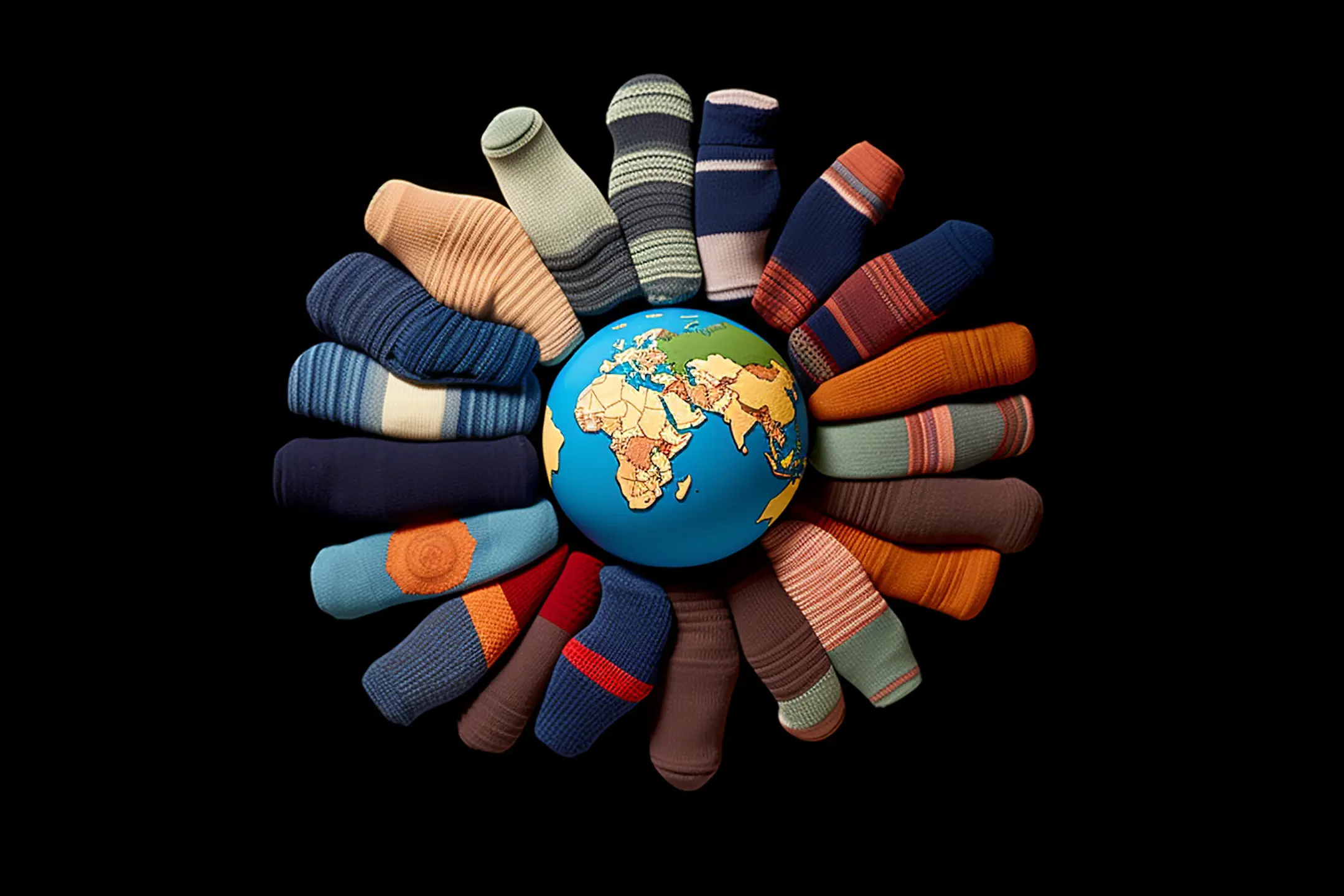
Travel puts socks through conditions most daily wear never encounters. A long-haul flight means eight-plus hours in enclosed shoes without the option to air your feet. A multi-day trip means wearing the same pairs more often than you would at home. Hot climates accelerate sweat accumulation. Unfamiliar footwear creates new friction points. The sock that’s fine for a commute often isn’t the one you want on day three of a trip.
The difference between a good travel sock and a standard one comes down to five specific properties. Here’s what they are and why each one matters.
1. Moisture management
Feet sweat constantly, not just during activity. In an aircraft cabin, in a warm climate, or inside closed shoes for extended periods, moisture accumulates faster than most people expect. A sock that absorbs moisture and holds it creates the conditions for blisters, odour, and fungal infections. A sock that wicks moisture away and allows it to evaporate keeps the foot surface drier across the full duration of wear.
Cotton fails this test badly. It absorbs readily and holds on. Wool manages moisture better but can be too warm for tropical destinations and is slower to dry. Synthetic polyacrylate fibres are specifically engineered for rapid moisture movement and fast drying, which matters when you’re hand-washing socks in a hotel room and need them dry by morning.
2. Antibacterial performance
The odour problem on long trips is a bacterial problem. Odour-causing bacteria multiply rapidly in warm, moist environments — exactly what the inside of a shoe becomes during extended wear. A sock with no antibacterial properties will accumulate bacterial growth across a day of travel regardless of how clean your feet were when you put it on.
Many travel socks claim antibacterial properties. The distinction worth making is whether that property is structural to the fibre or applied as a surface treatment. Surface treatments wash out, typically within 20-30 washes. Fibres with inherent antibacterial properties, where the action is part of the polymer structure rather than a coating, maintain performance over the life of the sock. For travel, this matters more than it does for daily wear because you’re relying on the same pairs repeatedly.
3. Multi-wear freshness
On any trip longer than a few days, either you carry more socks than is practical or you wash and re-wear. A sock that stays genuinely fresh for a second wear is a different proposition from one that needs washing after every use. This comes back to the antibacterial point — a sock that actively inhibits bacterial growth during wear starts the next wear in meaningfully better condition than one that doesn’t.
Metis PCA™ fibre is independently tested to reduce odour-causing bacteria by 99%. Because the antibacterial property is structural to the polymer rather than applied as a coating, it doesn’t degrade with washing. Customers who travel regularly consistently note multi-day wear as the test that separated Akeso from other socks they’d used. You can read those reviews on Trustpilot.
4. Drying time
Wool takes longer to dry than synthetic fibres. Cotton takes longest. For hand-washing in accommodation, a sock that dries overnight is useful. One that takes 24-36 hours creates a logistics problem. Synthetic moisture-wicking fibres dry significantly faster than natural alternatives, which makes them more practical for travel even if wool has other advantages in cooler conditions.
5. Weight and pack size
Heavier socks — particularly thick wool hiking socks — take up meaningful space in a carry-on. For lighter travel, a thinner sock with strong technical performance is more practical than a bulkier one. The mid-length styles in a moisture-wicking synthetic fibre offer a useful balance between coverage, protection, and packability.
Which Akeso style suits which travel
Long-haul flights and city travel. The mid-length sock is the most versatile option. Enough coverage to wear comfortably with casual shoes or sneakers, light enough to pack easily, and the Metis PCA™ construction handles extended wear in a cabin environment.
Hiking and outdoor travel. The long sock provides coverage above boot height, which prevents the abrasion that trail boots cause at the shaft and keeps moisture managed across longer days on your feet.
Warm weather destinations. The ankle sock or no-show sock keeps foot protection minimal while the Metis PCA™ fibre still manages moisture and bacterial growth in conditions where both accelerate.
Frequently asked questions
What type of sock is best for long-haul flights?
A moisture-wicking sock with inherent antibacterial properties. The cabin environment is warm and feet are enclosed in shoes for hours at a stretch. Cotton socks become damp and accumulate bacterial growth across a long flight. A sock that actively manages moisture and inhibits bacteria keeps feet significantly more comfortable for the duration and on arrival.
How many socks should I pack for travel?
For trips where laundry access is limited, a sock that genuinely stays fresh for a second wear reduces how many pairs you need to carry. With Metis PCA™ socks, many travellers find two to three pairs sufficient for a week-long trip when hand-washing is possible. Cotton socks typically need washing after every wear, which either means carrying more pairs or doing laundry more frequently.
Are wool socks better than synthetic for travel?
Wool manages moisture better than cotton and has natural temperature regulation, which makes it a reasonable option in cooler conditions. The limitations for travel are that wool takes longer to dry than synthetic fibres and can be too warm for hot weather destinations. Synthetic polyacrylate fibres like Metis PCA™ wick moisture faster, dry overnight when hand-washed, and maintain antibacterial performance across the life of the sock, which makes them more practical for most travel scenarios.
Can travel socks help prevent tinea?
Yes. Tinea thrives in warm, moist environments. A sock that wicks moisture effectively and has inherent antifungal properties removes the conditions the fungus needs to establish. For people who travel frequently to warm climates or spend time in shared facilities like hotel pools and gym showers, this is worth factoring into sock choice.
Do compression socks help on flights?
Compression socks support circulation on long flights and can help reduce swelling and the risk of deep vein thrombosis for people who are susceptible. They address a different problem from moisture and odour management. If circulation is the concern, dedicated compression socks are worth using. If foot comfort and freshness across a long day of travel is the concern, a high-performance moisture-wicking sock is the more relevant choice.