


The science behind Metis PCA™ fibre: Why it’s more than just a sock material
Most performance claims on sock packaging are vague. “Advanced technology”, “moisture control”, “odour resistant” – these phrases say nothing about what the material actually does or how long it keeps doing it. Metis PCA™ is different in a specific way: its antibacterial and antifungal properties are structural to the polymer itself, not applied as a surface treatment. That distinction matters because it determines whether the protection lasts or washes out.
This article covers what Metis PCA™ is, where it came from, what the independent testing shows, and why its properties behave differently from treated sock materials.
What is Metis PCA™?
Metis PCA™ is a synthetic fibre produced from polyacrylate (PCA). Its chemical structure is highly cross-linked with a polycarboxylate matrix, which gives the fibre a combination of properties that are unusual to find in a single material: hydrophilicity, softness, chemical resistance, high-temperature tolerance, and inherent antimicrobial and antifungal activity.
The fibre was originally developed in the United Kingdom in the 1970s, then largely forgotten. It was rediscovered by Genelle Coghlan, managing director of Colan Australia, during research into fire-resistant textiles. Colan’s initial application was a Personal Protection Bushfire Blanket, which is now used by NSW Police, NSW Fire and Rescue, NSW Rural Fire Service, and other Australian emergency services. The blanket uses 100% Metis PCA™ and is rated for direct flame exposure.
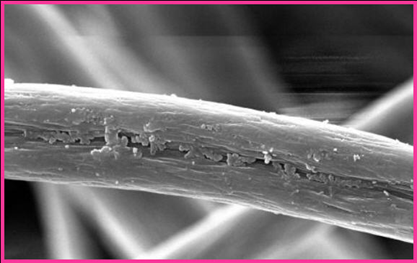
The highly cross-linked polycarboxylate chemical structure of the polymer matrix gives the fibre many of its properties
The accidental discovery of antifungal properties
While developing fire-resistant garments using Metis PCA™ blends, Genelle Coghlan noticed a fungal infection on her foot had cleared up after weeks of wearing socks made from the fibre. She hadn’t been expecting this. After stopping wear, the infection returned. She had the fibre independently tested at Thor Specialist Testing, an independent laboratory in Sydney.
The results confirmed what she had observed: Metis PCA™ has inherent antifungal and antimicrobial properties. Further testing showed the fibre was also non-flammable, hypoallergenic, and certified safe against harmful substances under the European Oeko-Tex Standard 100. From this, the Akeso Sock range was developed, named after Akeso, the Greek goddess of healing.
What the independent testing shows
Two results from independent laboratory testing are worth understanding specifically.
For antibacterial performance, testing found a 99% reduction in bacteria after 24 hours of contact with the fibre. This was measured using standard antimicrobial testing methodology, with the fibre in direct contact with bacterial cultures under controlled conditions.
For antifungal performance, the Metis PCA™ fabric was exposed to a fungal spore suspension alongside control groups including black cotton and filter paper, then incubated at 30 degrees Celsius for 28 days. The cotton and filter paper showed fungal growth. The Metis PCA™ fabric did not.
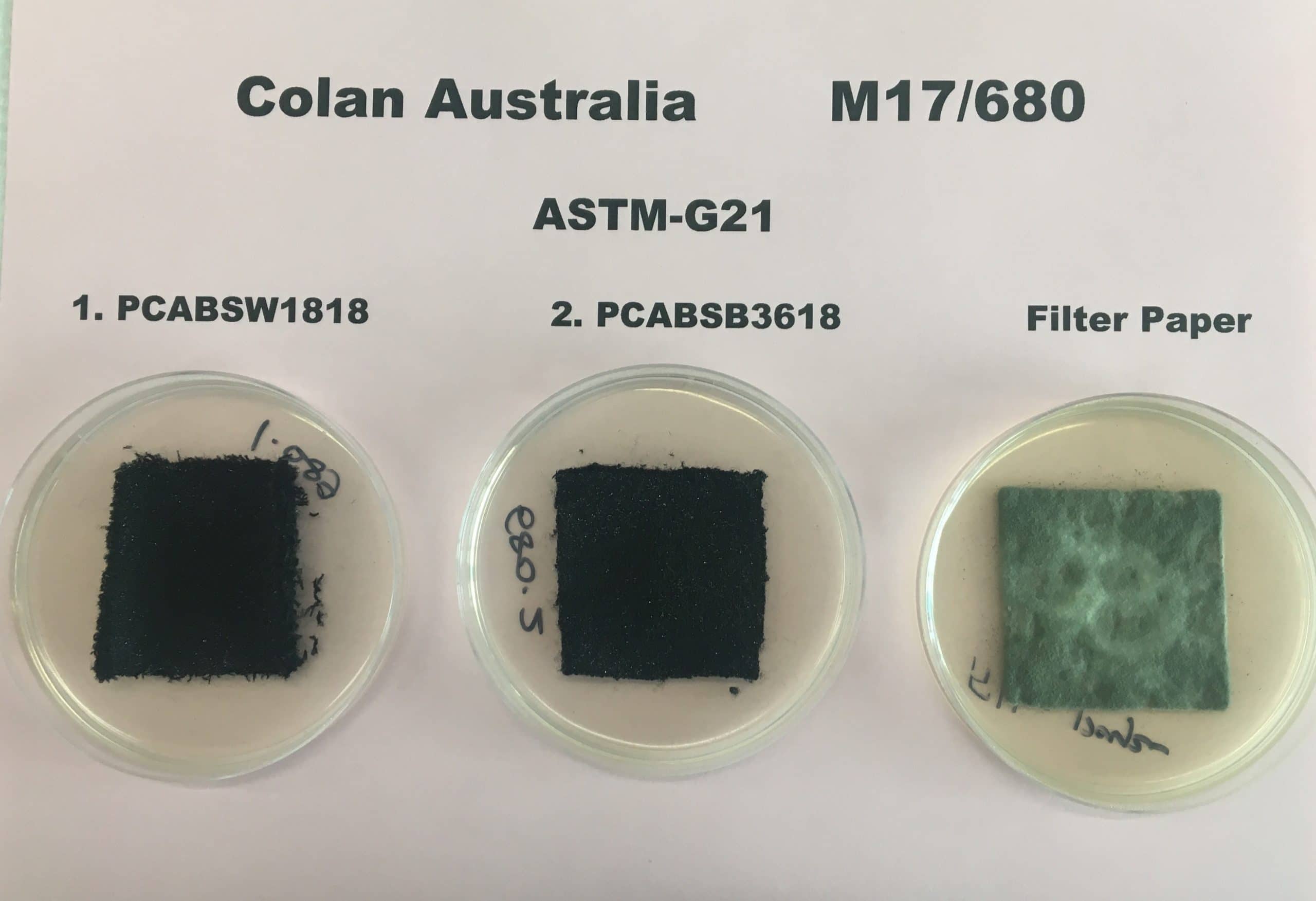
Both results reflect the inherent properties of the polymer structure, not a treatment applied during finishing. This means the results are not affected by washing. The fibre is either structurally intact and active, or it has worn down through use, but laundering does not remove its active properties the way it strips out silver ions or chemical coatings from treated socks.
Key properties of Metis PCA™
Antimicrobial and antifungal
As covered above, the antibacterial and antifungal properties are structural to the polymer and are verified by independent laboratory testing. They apply to both the bacteria responsible for foot odour and the dermatophytes and yeasts responsible for fungal infections including athlete’s foot. More detail on the antifungal mechanism is here.
Moisture management
Metis PCA™ wicks moisture away from the skin efficiently and dries significantly faster than cotton or bamboo when wet. This matters practically because moisture is the primary condition that enables bacterial and fungal growth in footwear. Drier conditions reduce the problem upstream of any antimicrobial activity.
Thermal regulation
The fibre adapts to temperature rather than providing fixed insulation. In hot conditions it helps keep feet cooler; in cold conditions it retains warmth. This makes it functional across Australian conditions year-round, including the transition between working outdoors in summer heat and moving into air-conditioned environments.
Fire resistance
Metis PCA™ does not burn, melt, or shrink when exposed to flame. It chars gradually instead. This property is what led to its original application in bushfire protection blankets and fire-resistant garments. In Akeso’s sock range, which uses a blended construction, the fire-resistant properties of the Metis PCA™ component are present but the blended socks are not rated as fireproof. The 100% Metis PCA™ Personal Protection Bushfire Blanket carries full fire ratings.
Comfort and hypoallergenicity
The fibre is soft, breathable, and hypoallergenic. It contains no silver, copper, or chemical additives, which makes it suitable for people with sensitive skin or metal sensitivities who react to treated antimicrobial socks. It is certified to European Oeko-Tex Standard 100, confirming it is free from harmful substances.
Environmental footprint
Because Metis PCA™ socks do not require washing after every wear, their water and detergent footprint over a product lifetime is considerably lower than standard socks. Airing overnight is sufficient for day-to-day freshness. Washing is only required when socks are visibly soiled.
Broader applications
Beyond Akeso’s sock range, Metis PCA™ fibre has applications in protective garments, medical apparel, sportswear, home furnishings, and building insulation. Its combination of heat resistance, low thermal conductivity, UV resistance, and inherent antibacterial and antifungal properties makes it viable across industries where these properties would otherwise require multiple materials or ongoing chemical treatment.
The full Akeso sock range made with Metis PCA™ is available in the sock shop.
Frequently asked questions
What does PCA stand for in Metis PCA™?
PCA stands for polyacrylate. Metis PCA™ is a synthetic fibre produced from polyacrylate with a highly cross-linked polycarboxylate chemical structure. This structure is what gives the fibre its combination of hydrophilicity, softness, chemical resistance, and inherent antimicrobial and antifungal properties.
Is Metis PCA™ safe to wear against skin?
Yes. Metis PCA™ fibre is hypoallergenic and certified to European Oeko-Tex Standard 100, which tests for harmful substances including pesticides, heavy metals, formaldehyde, and pH. It contains no silver, copper, or chemical additives. It is suitable for sensitive skin and for people with metal sensitivities who may react to silver or copper-treated socks.
Does Metis PCA™ lose its antibacterial properties after washing?
No. The antibacterial and antifungal properties of Metis PCA™ are structural to the polymer rather than applied as a surface treatment. Washing removes contaminants from the fabric surface but does not affect the polymer structure. The fibre’s antimicrobial activity will decline only as the fibre itself wears down through use, not through laundering.
How is Metis PCA™ different from silver-treated socks?
Silver-ion treatments work by releasing ions that are toxic to bacteria. They are effective when new but degrade with repeated washing as the ions leach out of the fabric. Metis PCA™ does not use silver or any added antimicrobial agent. Its activity comes from the physical and chemical structure of the polyacrylate polymer, which means it is not subject to the same degradation. It is also less likely to cause skin reactions in people with sensitivities to metal ions.
Is Metis PCA™ used in anything other than socks?
Yes. The most significant non-sock application is the Colan Personal Protection Bushfire Blanket, which is made from 100% Metis PCA™ and used by Australian emergency services including NSW Police, NSW Fire and Rescue, and NSW Rural Fire Service. The fibre is also used in protective garments, medical apparel, and has applications in home furnishings, sportswear, and building insulation. The sock range was developed after Genelle Coghlan discovered the fibre’s antifungal properties during garment development for fire services.
Can I buy the fire blanket as well as the socks?
Yes. The Colan Personal Protection Bushfire Blanket is available through the Akeso site. Unlike the socks, which use a Metis PCA™ blend, the blanket is 100% Metis PCA™ and is rated for use in direct bushfire exposure. It is the same product used by emergency services across Australia.