

Blisters are one of those foot problems that seem minor until you’re halfway through a long day and every step is a reminder they’re there. They form quickly, they’re slow to heal, and once you have one the friction that caused it doesn’t go away just because the skin has. Understanding what actually causes them, and what prevents them, makes a significant difference for anyone who spends extended time on their feet.
The short version: blisters form where repeated friction creates shear stress between layers of skin. Heat and moisture both accelerate this process. The right sock addresses all three factors. The wrong one makes all three worse.
How blisters actually form
When skin is subjected to repeated friction in the same spot, the outer layer of skin begins to separate from the layer beneath it. Fluid fills the gap as a protective response, forming the blister. The process is accelerated by heat, which softens skin and makes it more susceptible to shear damage, and by moisture, which increases friction between skin and fabric rather than reducing it.
Common blister locations tell you something about the source. Blisters on the back of the heel usually come from shoe fit or sock bunching. Blisters between the toes are typically caused by toe-to-toe friction combined with moisture. Blisters on the ball of the foot or under the big toe are usually from repetitive impact during running or walking. In each case, the sock is a variable in whether the friction reaches the threshold for blister formation.
How sock material affects blister risk
Cotton
Cotton absorbs moisture readily but wicks it away slowly. As physical activity continues, a cotton sock becomes progressively wetter. Wet skin has higher surface friction than dry skin, which increases the shear stress that causes blisters. Wet cotton also increases heat retention inside the shoe. For short, low-intensity wear, cotton is adequate. For long days, hard physical work, or any activity that generates significant foot sweat, cotton is a poor choice.
Wool
Merino wool wicks moisture better than cotton and regulates temperature more effectively. It is a genuine step up for blister prevention, particularly in cooler conditions. The limitations are that it can feel too warm in Australian summer conditions, and it tends to wear through faster than synthetic materials under sustained friction from heavy footwear.
Synthetic materials
Polyester and nylon blends wick moisture efficiently and dry quickly, which makes them a reasonable choice for athletic use. They reduce friction better than cotton or wool in wet conditions. The drawback is that they accumulate odour over time and provide no antimicrobial protection, which matters for extended wear or multi-day use.
Metis PCA™
Akeso Socks use Metis PCA™ fibre, which combines moisture-wicking performance with inherent antibacterial and antifungal properties. The fibre wicks sweat away from skin and dries faster than cotton or bamboo, which keeps the foot surface drier throughout the day and reduces the moisture component of blister formation. Because the antimicrobial properties are structural to the polymer rather than a surface treatment, they do not wash out over time.
One practical consequence for blister prevention: Akeso Socks do not need to be washed after every wear. Airing overnight is sufficient for day-to-day freshness. This matters for anyone doing multi-day activities like hiking or travel, where access to laundry is limited and carrying multiple pairs isn’t practical.
Fit matters as much as material
A well-performing sock material in the wrong size still causes blisters. Socks that are too loose bunch up inside the shoe, creating fold points that generate concentrated friction. Socks that are too tight restrict circulation and create pressure points, particularly around the toes and heel.
The fit check is simple: a correctly fitting sock should lie flat against the foot with no bunching at the toe box or excess fabric gathering at the heel. The heel cup of the sock should sit at your heel, not ride up the ankle or pull down into the shoe. If a sock shifts significantly during activity, it is either the wrong size or the wrong construction for that activity.
Sock height also matters in relation to shoe type. A sock that ends at the same height as the shoe’s collar creates a friction point at that edge. For work boots or hiking boots, a mid-length or long sock that sits above the boot collar eliminates this entirely.
Activity-specific considerations
Hiking and trail walking
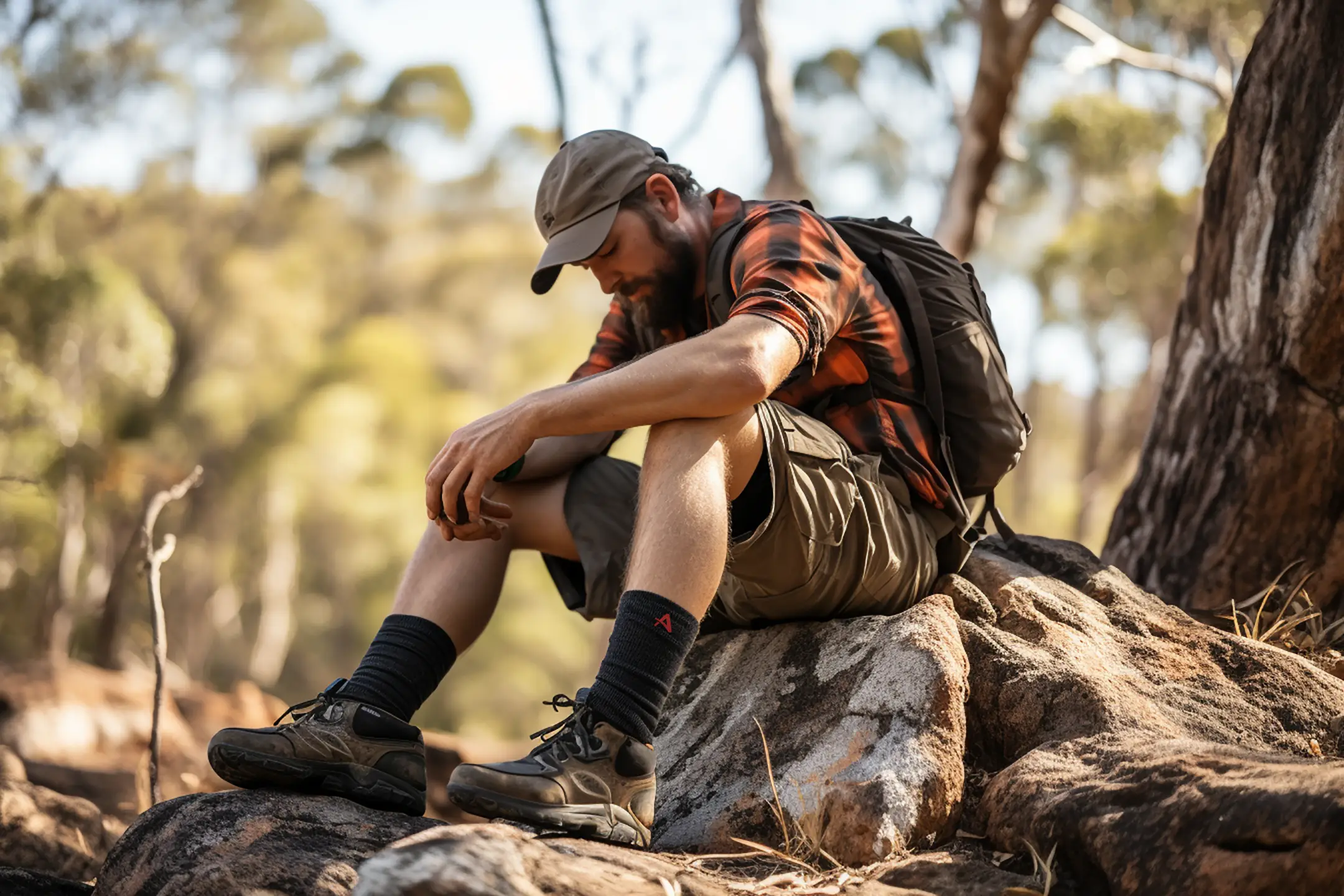
Multi-hour hikes generate sustained friction across a wide area of the foot, combined with the repetitive impact of descending terrain on the ball and toes. Moisture buildup over a long day is the primary risk factor. Socks with strong moisture-wicking properties and a cushioned sole reduce both variables. Height matters: a sock that sits above the boot top prevents the abrasion that trail boots cause at the shaft.
Running
Running creates higher-impact, higher-frequency friction than walking, concentrated on the areas of the foot that strike and push off. The toes and the ball of the foot are the most common blister sites for runners. Seamless or flat-seam construction around the toe box reduces friction at the most vulnerable point. Moisture management is critical because sweat accumulation during a run happens faster than in most other activities.
Work boots and steel caps
Long days in enclosed work boots create sustained heat and moisture buildup with limited opportunity to air feet out. The heel and the area around the little toe are common blister sites in steel caps, caused by the rigid structure of the boot combined with lateral movement during physical work. A sock with enough cushioning to reduce impact, strong moisture-wicking, and coverage that sits above the boot collar addresses the main risk factors.
A real-world test
Akeso customer Jonathan Vallario put the socks to a direct comparison test, wearing Akeso on one foot and a standard sock on the other. The results across an extended wear period are documented in the Instagram post below.
View this post on Instagram
The full Akeso sock range is available in the sock shop, with options across ankle, mid-length, long, and knee-high styles to suit different footwear and activity types.
Frequently asked questions
Can socks cause blisters?
Yes. Socks that bunch, slip, or fit poorly create localised friction points that cause blisters regardless of how well the shoe fits. Material also matters: cotton socks that retain moisture increase skin surface friction as sweat accumulates, which accelerates blister formation. The right sock fit and material reduce both sources of friction.
Does wearing two pairs of socks prevent blisters?
It can help in some situations. The logic is that friction occurs between the two sock layers rather than between the sock and skin. In practice, this works better for hiking and trail use than for activities where shoe fit is already precise, because a second sock layer changes the fit of the shoe and can create its own pressure points. A single high-quality moisture-wicking sock in the right size is generally more effective than two mediocre ones.
What socks are best for preventing blisters?
Socks that combine moisture-wicking properties, a well-fitted heel cup, flat or seamless toe construction, and appropriate cushioning for the activity reduce blister risk across all the relevant factors. Material matters because moisture is a major driver of friction. Akeso Socks use Metis PCA™ fibre, which wicks efficiently and dries quickly, keeping feet drier throughout activity than cotton or bamboo alternatives.
How do I stop getting blisters on the back of my heel?
Heel blisters are almost always caused by movement between the heel and the back of the shoe, combined with a sock that doesn’t hold the heel cup in place. Check that your sock’s heel cup is sitting at your heel rather than riding up. Check that your shoe is laced tightly enough to limit heel lift. If the sock slips during activity, it’s contributing to the friction. A sock with a defined heel cup construction and the right size for your foot reduces this significantly.
Are seamless socks better for blister prevention?
For the toe box specifically, yes. Seams across the toe area create a raised ridge that causes friction with each step, particularly during running or extended walking. Seamless or flat-seam toe construction eliminates this friction point. It matters most for high-mileage activities. For general daily wear or work in boots, the toe seam is usually less of a factor than sock fit and moisture management.
Do blister plasters help once a blister has formed?
They protect the blister from further friction and allow the underlying skin to heal without the blister being broken by continued activity. They are worth using if you need to continue activity after a blister forms. The better approach is to drain a large, painful blister under clean conditions with a sterilised needle, cover it, and address the footwear or sock issue that caused it. Small, painless blisters are generally best left intact and allowed to reabsorb.